
PTSD in First Responders: Signs & Treatment Weatherford

For first responders in Parker County, PTSD is not a sign of weakness; it is a predictable physiological response to repetitive, high-stress exposure. Effective treatment involves moving beyond surface-level conversations to rewire the nervous system, ensuring you can protect your career, your family, and your life.
The Reality of PTSD in Parker County
First responders in Weatherford and Aledo face a unique blend of rural and suburban stressors—from high-intensity I-20 accidents to calls involving neighbors they know—that lead to "complex trauma" rather than a single isolated event.
Unlike urban departments where you are often just a number, working in the Weatherford Fire Department, the Parker County Sheriff’s Office, or local EMS means being deeply integrated into the community. While this creates a strong sense of camaraderie, it adds a heavy layer of pressure. When you respond to a fatal vehicle accident on I-20 or a drug-related arrest involving a minor, there is a high probability you know the family involved.
This "tight-knit" nature often leads to isolation. Many local responders choose to live further out in the county specifically to escape the daily stressors of the job. However, when the "switch" never turns off, that isolation turns into a breeding ground for complex trauma—the stacking of horrific calls, death, and abuse over a 20-year career.
Recognizing the Signs: When "Suck It Up" Stops Working
PTSD manifests differently in responders than in civilians, often appearing as irritability, "venting" at home, or a reliance on alcohol to numbs the adrenaline.
In our culture, "toughness" is the standard. But holding everything in doesn't make the trauma disappear; it just forces it to find a different exit.
- The "Toggle Switch" Failure: You are trained to be an "Operator" on shift—stoic, fast, and detached. If you can’t flip that switch back to "Parent" or "Spouse" when you get to Aledo or Weatherford, you end up bringing the basement of the station into your living room.
- The Alcohol Trap: Because the nervous system is so "wound up," many resort to "grabbing a beer" to decompress. Without professional intervention, this frequently slides into alcoholism and depression, affecting your physical health and your marriage.
- Hyper-vigilance: If you are constantly scanning the room at a restaurant in Hudson Oaks or can’t sit with your back to the door, your brain is stuck in a survival loop.
Why Traditional Coping Mechanisms Fail
Surface-level talk and "back-of-the-rig" venting rarely address the root causes of trauma, often leaving the core issues untouched.
Most responders and veterans are masters of "surface-level" talk. You can describe a horrific scene with dark humor and clinical detachment, but that doesn't address how it is impacting your sleep, your temper, or your soul.
Seeing a professional provides a safe, neutral ground away from the department. As someone who has been a fireman and seen what you see daily, I understand that the "toughness" barrier is often a fear that asking for help equals a career-ending weakness. In reality, the statistics are clear: those who prioritize their mental health have longer, more successful careers.
Evidence-Based Treatment: Rewiring the System
Modern therapy uses specific tools like CBT and Exposure Therapy to help you regulate your nervous system and change how you process traumatic calls.
We don't just "talk about your feelings." We use tactical approaches to reclaim your life:
- Cognitive Behavioral Therapy (CBT): We identify the thoughts and perceptions driving your distress and change the "internal script" that keeps you stuck.
- Cognitive Processing: We work through specific, "sticky" calls—the ones you can't stop seeing—and help your brain file them away correctly so they stop triggering a physical response.
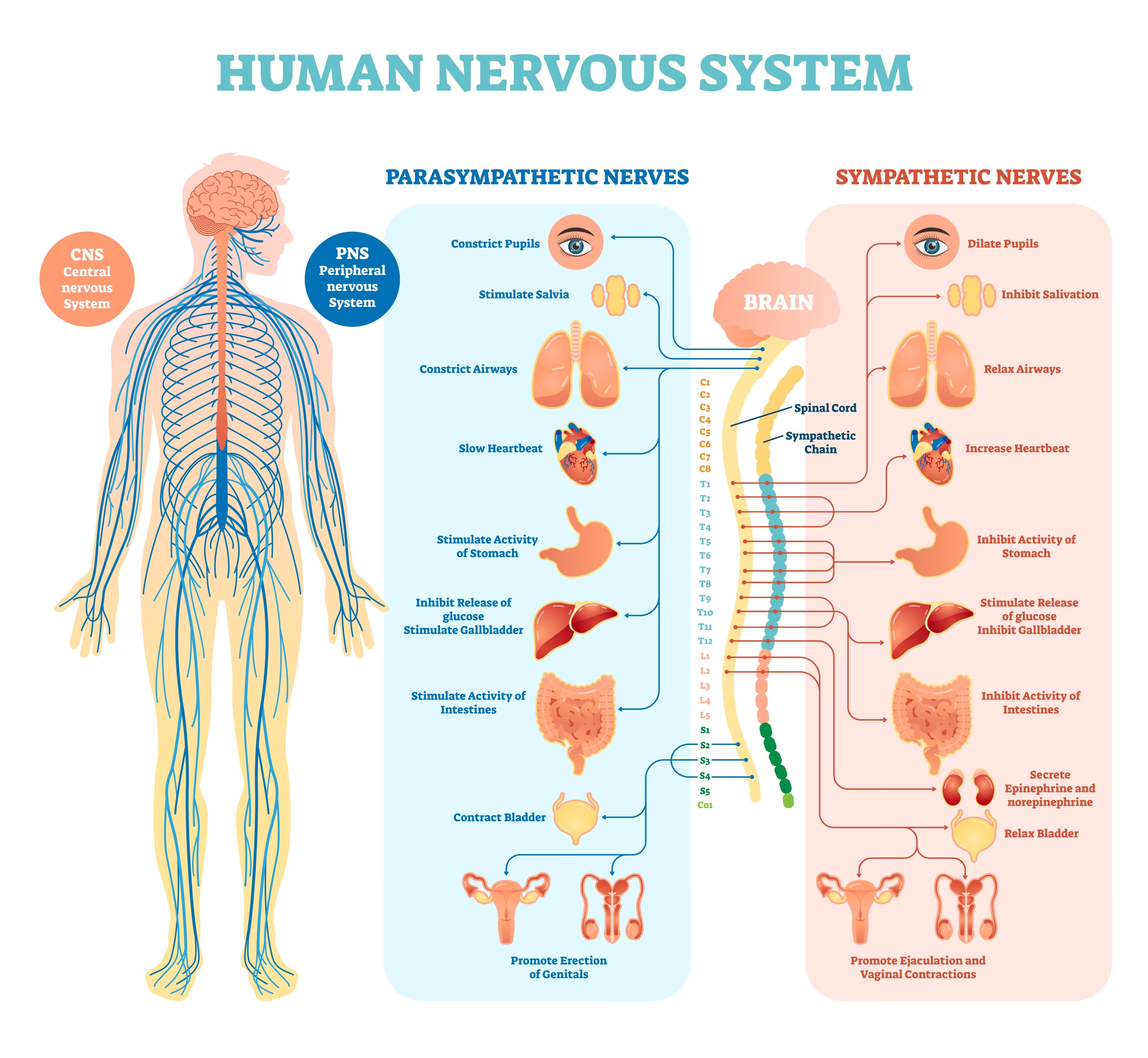
- Exposure Therapy & Regulation: Backed by years of evidence with veterans, this involves safely revisiting the trauma while teaching your body how to stay calm. We use breathing exercises and grounding techniques to "down-regulate" your nervous system.
Confidentiality and Career Longevity
Your career is protected by HIPAA and legal mandates; seeking help is a private, proactive move to ensure you stay on the job.
The biggest fear in Parker County is the "Fit for Duty" report. It is important to know that every session is HIPAA compliant. I am legally bound to keep our sessions private. Seeking counseling isn't about being "broken"—it’s about maintenance. Just as you wouldn't let a radical engine knock go ignored in a ladder truck, you shouldn't let complex trauma go untreated in your own mind.
You aren't alone. Many of your brothers and sisters in the department have already taken this step. By doing so, they’ve been able to perform their jobs more effectively and bring stability back to their families.
Frequently Asked Questions
1. Will my Chief or Sheriff find out I’m in therapy? No. Your sessions are strictly confidential and protected by HIPAA law. Unless there is an immediate, specific threat of harm to yourself or someone else, your department has no access to your records or the fact that you are seeking help.
2. How do I know if I have PTSD or if I’m just "burnt out"?Burnout is usually about exhaustion and cynicism regarding the job. PTSD involves your nervous system—flashbacks, night sweats, being easily startled, or feeling "numb" to things you used to enjoy. If your "internal alarm" won't turn off even when you're off-duty, it's time to talk.
3. I’ve seen things that would "break" a normal person. Won't I shock a therapist? Having been a fireman myself, I speak your language. You don't have to sanitize your stories or worry about my reaction. My goal is to be the "safe place" where you can drop the armor without judgment.
4. Can I still be a good cop/firefighter/medic if I have PTSD? Yes. In fact, many responders find that once they learn to regulate their nervous system, they are actually more effective on-scene because they aren't already starting their shift at an "8 out of 10" stress level.
5. How long does treatment take? There is no fixed timeline, but many responders start to feel a shift in their "countenance" and stress levels within just a few sessions as they learn to put language to their experiences and use regulation tools.
